Your comprehensive guide to electric and hybrid leasing

Electric and hybrid cars are no longer the future – they're very much the present on UK roads.

With the 2030 ban on new petrol and diesel car sales approaching, combined with an ever- expanding public charging network and available government grants, more drivers are making the switch to electric.

Some are diving straight into full electric, while others are easing in via the hybrid stepping stone.

But despite growing interest, persistent myths and concerns about cost mean many drivers still write off going electric before properly exploring their options.

Here's the thing: leasing can make electric vehicles (EVs) far more accessible than you might think, and it’s one of the most affordable ways to make the switch.

But without further ado, let’s dive into electric and hybrid leasing, looking at both the good, and the bad.
Left: an electric car from 1893 | Right: Thomas Parker's electric car

Left: an electric car from 1893 | Right: Thomas Parker's electric car

The history of electric cars

Though you can spot an electric car around pretty much every corner now, electric vehicles are actually much older than you might think.

The first roadworthy prototype electric car was built by Thomas Parker in 1884 – a full year before the Benz Motorwagen, widely considered the world's first production car.

Electric innovation continued throughout the decade, and by 1890, American inventor William Morrison had created an electric carriage that could manage over 100 miles on a single charge (though it took 10 hours to recharge and had a top speed of just 12mph).

Electric cars made up a third of all vehicles on American roads by the early 1900s, before Henry Ford's mass-produced Model T made petrol cars affordable and accessible to everyone.

Fast forward to today, and every automotive manufacturer has at least one electric offering in their line-up, thanks to the ZEV mandate.

The rise of EV-only brands like Tesla, BYD and Polestar shows just how far we've come from those early experiments.

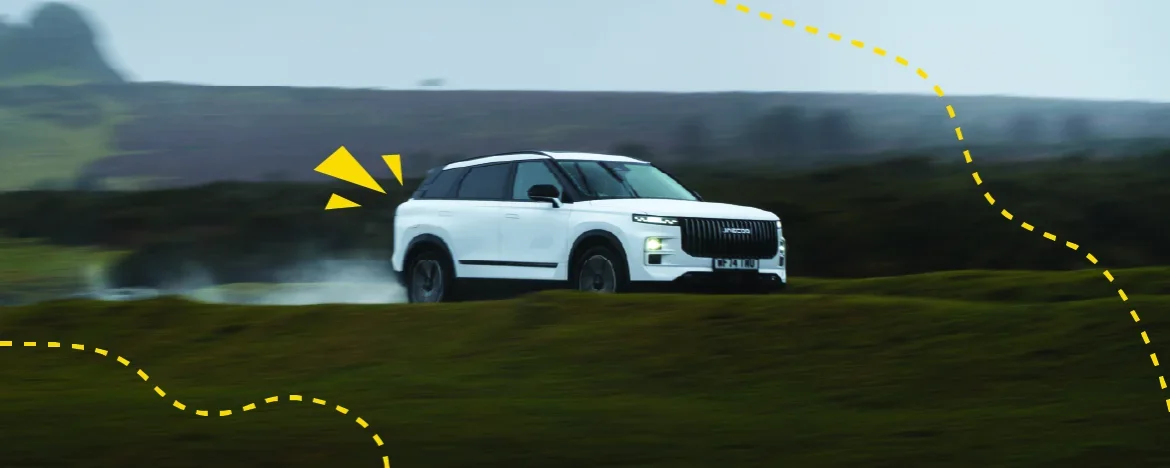
JAECOO 7

JAECOO 7

Hybrid vs electric cars

One of the first decisions you’ll need to make is whether you want to dip your toe into the electric world, or whether you want to dive right in.

A plug-in hybrid (PHEV) vehicle combines both combustion and electric power, making it the perfect compromise.

It offers the best of both worlds. If you want the benefits of electric driving, but without having to fully commit, you’ll want to opt for a hybrid lease.

The engine will initially use electric power if the battery is charged, and then switches between fuel types for maximum efficiency with minimum emissions.

With PHEVs like the JAECOO 7 Super Hybrid System (SHS) boasting a total range of up to 750 miles (WLTP Comb), you'll benefit from electric driving for the majority of your journeys. The clever system uses petrol as a backup generator, keeping your fuel costs and tailpipe emissions low.

You might also see that some cars are advertised as being a ‘mild hybrid’.

These also use a combination of a combustion engine and an electric motor to increase fuel efficiency and decrease emissions, but unlike a PHEV, there’s no way to plug in and recharge.

The electric motor and battery in mild hybrids are smaller, offering gentle electrical assistance to the engine rather than taking over completely.

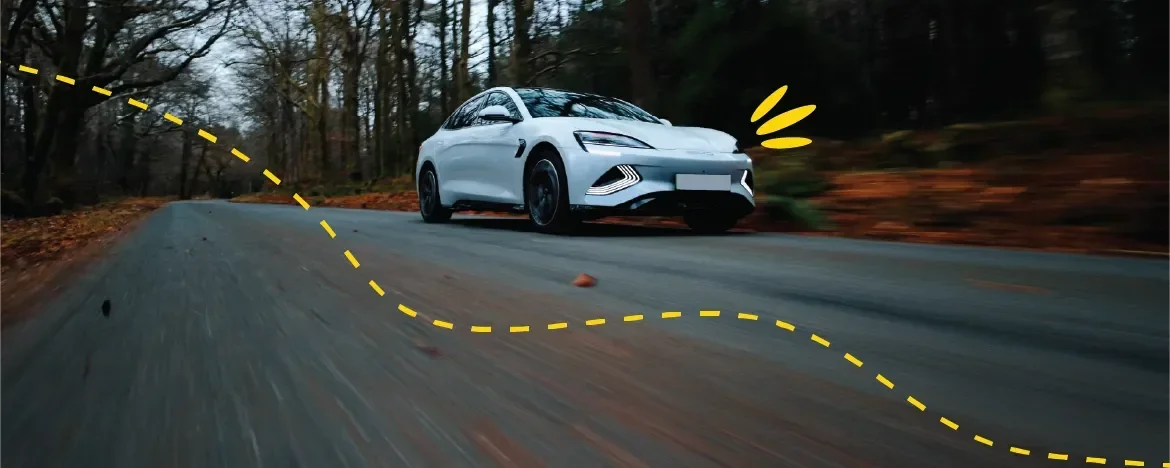
BYD SEAL

BYD SEAL

What is electric car leasing?

Leasing an electric car is like ‘renting’ a brand-new EV for an agreed term. You’ll pick an annual mileage allowance and pay an initial rental upfront, before continuing to pay the fixed monthly cost until the end of the contract.

Once your deal ends, you simply hand the car back and you’re free to move into a new model.

It’s a hassle-free way of getting behind the wheel of a brand-new car, especially if you’re not sure about committing to an electric car long-term, or you want the freedom of being able to drive the latest models every two to four years.

And with electric technology advancing so quickly, you’ll never be left behind.

Every time your contract comes to an end you can switch to a newer model, benefiting from the latest technologies and enjoying the best of electric driving every time.

How does electric car leasing work?

Once you’ve picked your electric car lease deal, you’ll need to decide how long your contract will last, your annual mileage allowance, and how much you’re wanting to pay upfront.

Generally, an electric lease will last between 24 and 48 months.

Your fixed monthly payment will be based on the above criteria, as well as the depreciation of your chosen car, but it won’t change throughout your lease.

For the length of your agreement, the car is yours.

You’ll basically be able to treat it as though you’d bought it, though it’s worth noting that any damage that falls outside of the BVRLA’s Fair Wear and Tear Guidelines, or any excess mileage, might result in additional fees at the end of your lease.

You can even add a maintenance package to your lease, which will cover many of the disposables like tyres and windscreen wipers, to make budgeting your automotive costs even easier.

Benefits of leasing an electric vehicle

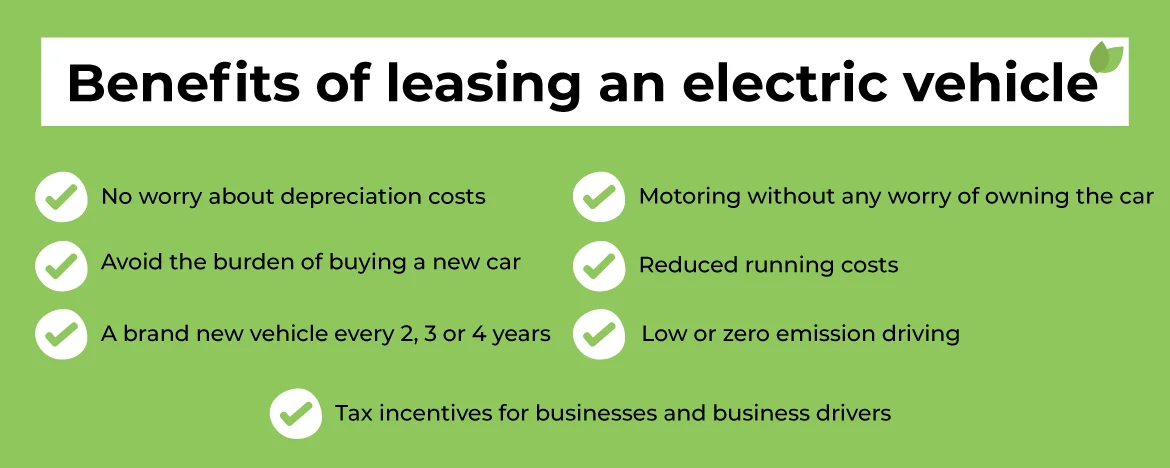
The benefits of leasing an electric vehicle

Benefits of leasing an electric car

Electric leasing is a winning combination for your wallet, your driving pleasure and your environmental consciousness. Here's why:

Lower upfront costs

  • Access the newest EV models without the hefty purchase price
  • Choose your lease length, annual mileage and initial payment to suit your budget
  • No-deposit options available if you'd rather not pay a large sum upfront

Reduced running costs

  • Charging at home overnight is generally cheaper than petrol or diesel
  • Fewer moving parts mean less servicing and no oil changes
  • Exempt from congestion charges and Ultra Low Emission Zone fees
  • Free charging is available at many supermarkets and car parks (check if parking charges still apply)

Tax benefits for businesses

  • Significantly lower Benefit in Kind (Bik) tax rates compared to petrol or diesel vehicles

Flexibility to upgrade

  • Switch into a newer model every two to four years
  • Keep up with the latest tech and safety features without the hassle of selling

It’s also worth knowing that from April 2025, EVs will be subject to Vehicle Excise Duty (road tax) for the first time. And from April 2026, they’ll also be subject to a new eVED – a pay per mile system.

But this still works out cheaper than fuel duty.

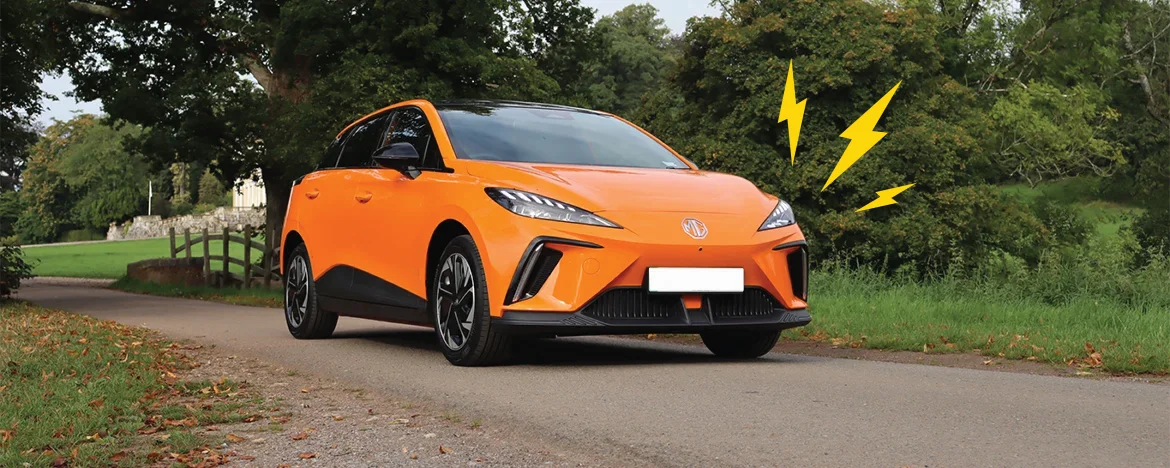
MG4 EV

MG4 EV

Are electric cars cheaper to lease?

Leasing an electric car normally works out cheaper than buying, whether that’s outright or on a finance plan like Personal Contract Purchase or Hire Purchase.

EVs are more expensive to buy upfront than their petrol or diesel counterparts, but spreading the cost across a fixed period can make it much more affordable.

The cost of your lease is based on the depreciation value of the car, not its full value. This is what makes leasing a more affordable proposition and is also the reason why you normally won’t have the option to buy when your lease is up.

The depreciation risk sits with the funder, not with you.

This makes an electric lease less risky on your part. No worrying about what your car could be worth in the future, and no faff of having to sell it when the used EV market is still relatively new.

You can also save money on the running costs, because EVs are generally cheaper to fuel, even with higher electric tariffs, and don’t need to be serviced as much.

EVs tend to be exempt from congestion charges, so you’ll also save money here too if you live near or drive in a clean air zone.

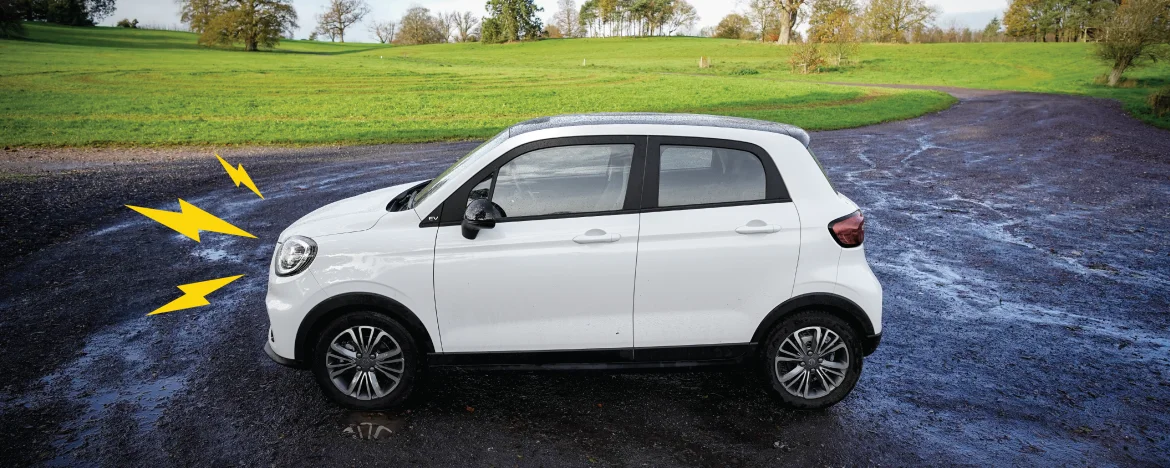
Leapmotor T03

Leapmotor T03

How much does it cost to lease an electric car?

The cost of your electric car lease will vary depending on several factors.

The first of these is the actual car you pick.

More premium models, like the Tesla Model Y will demand a higher monthly price, while more affordable EVs, like the MG4 or the Renault 5, will cost less.

Alongside the make and model, the length of your lease, your annual mileage, your initial rental and whether you want a maintenance package will all impact your ongoing monthly payments.

But the electric car market has never been in a better place.

With so much choice, from the tiny Fiat 500e to the imposing BYD SEAL, there’s sure to be an EV that suits your lifestyle and your budget.

Is it better to buy or lease an electric car?

Whether buying or leasing an electric car is better for you is going to depend on your priorities and circumstances.

Choose leasing if you:

  • Want to drive brand-new EVs without worrying about depreciation or resale value
  • Prefer lower monthly costs over ownership
  • Like the flexibility to switch cars every few years
  • Want to try electric driving without long-term commitment
  • Value hassle-free motoring with fixed costs

At the end of your lease term, simply hand the car back and move into something new – or switch back to petrol or diesel if electric isn't quite right for you yet.

Choose buying if you:

  • Want to own the car outright
  • Plan to keep the vehicle long-term
  • Don't mind higher upfront costs
  • Prefer no mileage restrictions

Leasing gives you access to the latest EV tech and safety features without the depreciation risk or hefty purchase price.

Volkswagen ID.4

Volkswagen ID.4

Things to consider before leasing an electric car

Before choosing your electric lease deal, think about these key questions:

Additionally, you’ll need to watch out for excess charges.

Make sure you've chosen the right annual mileage limit for your lifestyle. If you go over this, you'll be charged a price in pence per mile (worked out at the beginning of your lease).

Your mileage limit affects both your monthly payment and the car's depreciation, so pick one with some wriggle room for potential changes.

Excess damage outside of the BVRLA's Fair Wear and Tear guidelines can also result in additional charges at the end of your lease.

Keep your car properly maintained and serviced throughout the term, and fix any major damage before handing it back. A maintenance package can help spread these costs, but be sure to give your EV a thorough check before returning it to your funder.

Businessmen in car

Business leasing

Why should businesses choose electric car leasing?

There are additional incentives for business electric leasing, on top of the usual benefits.

There's a big push for businesses to switch to EVs, with the government consistently releasing funding grants and tax reliefs for companies choosing to make that switch.

Right now, the Benefit in Kind rate for all electric cars is fixed at 2% in 2025. From there, it'll increase by 1% each year until 2028 when it tops out at 5%. This is significantly lower than petrol and diesel vehicles, which can attract BiK rates of up to 37%.

For a higher-rate taxpayer, the difference between a petrol car in the higher BiK band and an electric equivalent in the 2% band could mean saving hundreds of pounds every month - all while driving a newer, cleaner vehicle.

Salary sacrifice schemes

You could save even more cash with a salary sacrifice scheme.

It's a great way to lease a new car for a smaller price tag. The scheme works by you 'sacrificing' a portion of your salary to cover the net cost of the EV lease. As this is taken off your salary, you'll also pay less tax and National Insurance.

Workplace Charging Scheme (WCS)

There are also grants available for businesses to install charging points at the workplace.

It's called the Workplace Charging Scheme (WCS), and it can reduce the initial investment by up to 75%.

If your business is eligible for the scheme, you can get up to £350 per socket for a maximum of 40 sockets. You don't have to install 40 at once – you can apply to the WCS as many times as you need to until you hit that limit.

So, whether you're only looking to dip your toe into the EV world with one or two chargers to start, or you're diving right in and installing all 40 in one go, the WCS is one way to save some serious cash and provide an incentive for your employees to charge at work.

MG4 EV

MG4 EV

Which electric car has the best range?

These are the best long-range electric cars to lease if long journeys are your biggest priority:

If you’re on a tighter budget, but still want an excellent electric car lease, these are our top picks for you:

What is the best compact electric car lease?

If you need your new EV lease to fit into the tightest of parking spots without breaking a sweat, these are the cars to look at:

What is the best high-performance electric car lease?

If you don’t want to give up the thrill of driving in the pursuit of zero emissions, these are the five high-performance electric lease cars you’ll want on your wish list:

Ready to start your electric leasing journey?

Whether you're drawn to the flexibility of a hybrid or ready to go fully electric, leasing makes the switch more affordable and hassle-free than you might think.

With lower running costs, tax benefits, and the freedom to upgrade to the latest tech every few years, there's never been a better time to explore your EV options.

Ready to start your own electric leasing journey?

Beth Twigg

Beth Twigg

Beth is our Content Marketing Manager, tasked with creating great articles to keep you both entertained and informed. She has two years previous experience, but has been writing and scribbling for much longer.