Drivers over the age of 55 risk being left behind in a new era of electrification - what’s holding them back and what more can be done?

As the automotive world shifts towards a future of sustainable driving, the combustion engine is not the only thing at risk of being left behind.

In exclusive data from YouGov back in 2022, it was revealed that an alarmingly low percentage of elderly drivers were considering an electric vehicle (EV) as their next car lease.

Out of the thousands of car lease customers that were quizzed, just 26% of those admitted that 'going electric' was the most important factor in the search for their next car.

In contrast, younger age brackets, in particular 25-34 year olds (33%) and 35-44 year olds (36%), were far more likely to go green.

With the 2030 petrol and diesel now just a few years away, we want to find out what was contributing to such a stark difference in appetite among different age brackets, and what more can be done to level the playing field.

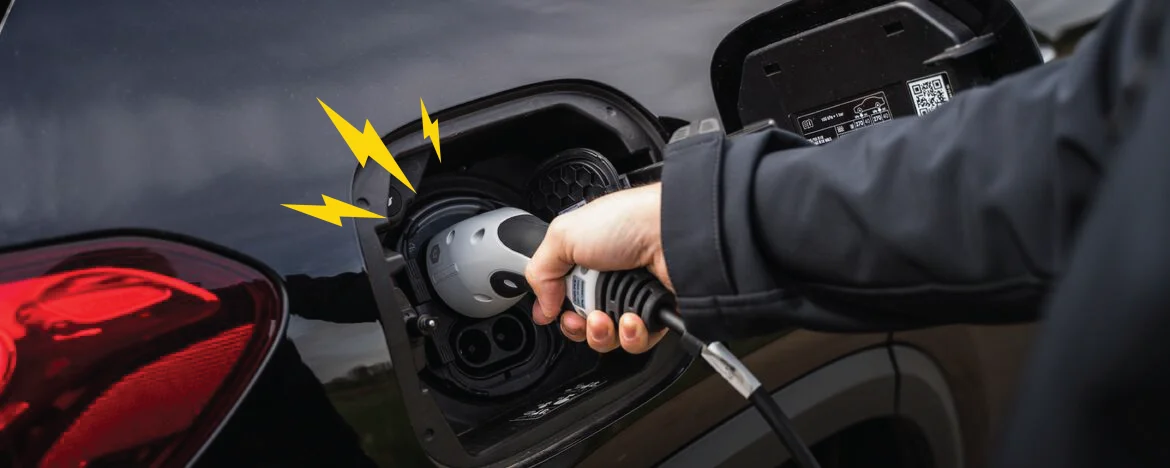
Man charging the Mercedes-Benz EQA

What does the data day?

What actually mattered to drivers over 55?

If going electric wasn't a priority, what was? Our 2022 YouGov data painted a pretty clear picture of what older drivers actually cared about when choosing their next car.

The priorities for over-55s:

  • Reliability: 76% (higher than any other age group)
  • Safety: 53%
  • Vehicle brand: 50%
  • Going electric: 26%

See the problem? Electric vehicles were dead last. And it's not because older drivers didn't care about the environment or the future – it's because they had more immediate concerns.

They wanted cars that wouldn't let them down. Cars from brands they recognised and trusted. Cars that would keep them safe.

The younger lot (your 25-44 year olds) were far more willing to take a punt on new technology. But when you've been driving for 30, 40, even 50 years, you want proof. You want a track record. And back in 2022, EVs still felt like a gamble to a lot of people.

Here's the kicker though: modern EVs are brilliant at all the things older drivers said they wanted.

They're reliable: fewer moving parts means less to go wrong.

They're safe: most EVs score five stars in safety tests.

And they come from brands people know: BMW, Mercedes, Audi, Volkswagen, you name it.

The industry just hadn't done a very good job of telling them.

The tech barrier – real or imagined?

There's this assumption that older drivers are put off by all the technology that comes with EVs. The apps, the charging networks, the digital dashboards – all of it.

And look, there's probably some truth to it.

When you Google "how to charge an electric car," you're bombarded with lists of apps you supposedly need.

Apps to find chargers.

Apps to pay for charging.

Apps to schedule your charging for off-peak rates.

It's exhausting just reading about it.

But here's what our data actually showed: when we asked over-55s what they valued most from their previous leasing experiences, 51% said personal service. Compare that to younger drivers, where only 25-31% said the same thing.

So it's plausible that it’s not that older drivers can't handle the tech. 

It's that they don't want to have to figure it all out on their own. They want someone to explain it to them properly. They want a phone number they can call if something goes wrong. They want a human being, not a chatbot.

The industry's response? Here's an app.

And actually, in 2026, you don't even need most of those apps anyway; the majority of public chargers take contactless payments. Job done.

But back in 2022, that message wasn't getting through, and the confusion was putting people off.

Where were the chargers?

This is where things get really interesting. We decided to look at whether the UK's charging infrastructure was actually serving the places where older people live.

Spoiler: it wasn't.

Back in early 2023, when Zap Map reported 38,982 charging devices across the UK, we compared this against areas with the oldest populations. The BBC had previously identified Blackpool (average age 43.2), Worthing (43), Bournemouth (42.8), Southend (42.2), and Birkenhead (42.1) as some of the oldest areas in the country.

Worthing a town with a population of 111,000 – had just 21 chargers. That's 7% of West Sussex's total charging infrastructure, despite Worthing accounting for 12% of the county's population.

Blackpool, a major tourist destination no less, had just 42 chargers out of the North West's 2,439 devices.

Barnsley had the lowest provision in South Yorkshire: just 60 chargers out of 365 in the region.

If you lived in one of these towns and you were thinking about going electric, what would you have concluded? That it wasn't built for you. That it was built for people in London, or Manchester, or other big cities where the infrastructure was better.

And you'd have been right.

Has it got better?

Fast forward to December 2025, and the UK now has 87,796 charging points. That's more than double what we had in early 2023.

The growth has been rapid:

  • 2021: 28,460 devices
  • 2023: 53,865 devices
  • 2024: 73,000+ devices
  • December 2025: 87,796 devices

In 2025 alone, nearly 15,000 new charge points were added. Rapid and Ultra-rapid chargers have more than tripled since 2021, with 17,935 now available across the country.

On paper, it looks like massive progress. And it is. But here's the question nobody's really asking: has that growth reached the places it needs to?

And that answer would be no.

Worthing still only has 24 chargers. In 2022, it had 21. That's an increase of three. Three chargers in nearly four years, while the national network more than doubled.

Let's break that down. The UK added over 48,000 charging points between early 2023 and the end of 2025. Worthing – a town of 111,000 people with one of the oldest populations in the country – got three of them.

If you want older drivers to switch to EVs, you need to put the infrastructure where older drivers actually live.

It's not complicated. We know which towns have the oldest populations. We know these areas were underserved in 2022. And by the looks of it, they're still underserved now.

You can't expect someone to lease an electric car when their nearest charger is miles away and there's a queue every time they need to use it. You can't tell them "the UK has nearly 90,000 chargers now!" when they can count the ones in their town on one hand.

Want to know why only 26% of over-55s said going electric was important to them in 2022? Because the infrastructure wasn't there for them. And in places like Worthing, it's still barely there now.

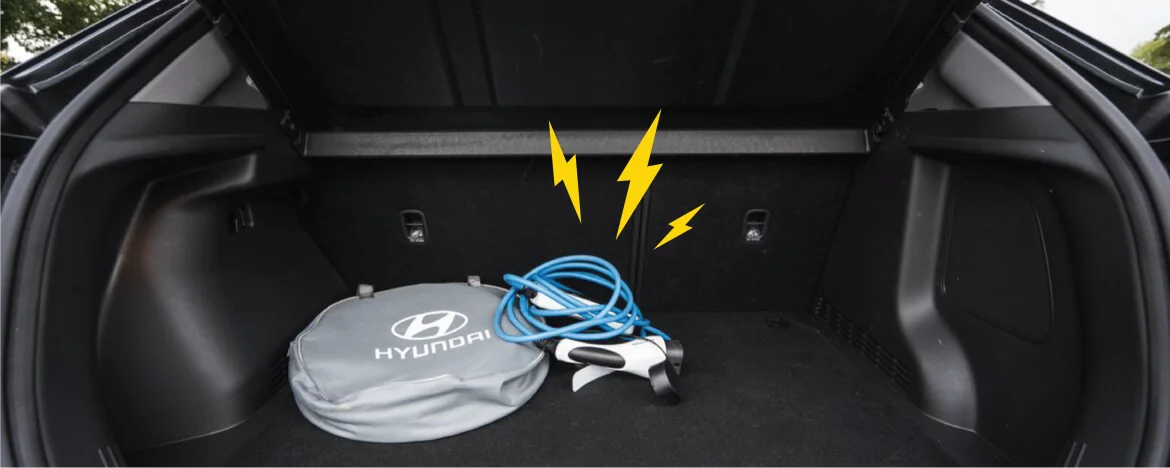
Hyundai Kona Electric

Can they afford EVs?

The money question

Here's where it gets complicated. Our 2022 survey found that 53% of over-55s said value for money was the most positive thing about their previous leasing experience.

And the 55 to 65 age group has the third-highest disposable income in the UK. They've got the money. They're not trying to scrimp, but they want to know they're getting a fair deal.

The problem in 2022? EVs were expensive.

Even at the budget end of the market, you were looking at a significant premium over a comparable petrol or diesel car.

But there's another layer to this. Our data showed a pretty stark divide based on social grade:

  • ABC1 drivers (middle and upper class) over 55 were more aware of leasing options and more open to EVs
  • C2DE drivers (working class) over 55? Not so much. 70% of them had never even heard of any major leasing brands.

So it wasn't just about whether EVs were expensive. It was about whether people even knew that leasing was available to them.

The affordability catch-22

By 2026, things have shifted. 

The average EV costs between £48,000 and £50,000, but that's heavily skewed by luxury models at the top end. Battery costs have dropped dramatically which have resulted in more affordable EVs.

Chinese manufacturers like BYD, MG, and Leapmotor have flooded the market with budget-friendly options. The MG4 starts from around £26,000, while the BYD DOLPHIN undercuts most European rivals. On price alone, they're compelling.

But here's the problem: remember what our data said was important to over-55s? The vehicle brand mattered to 50% of them. Reliability mattered to 76%. They wanted names they recognised, names they trusted.

For many older drivers, these Chinese brands don't tick that box. 

They've never heard of newcomers like XPENG, Geely, or Changan. They don't know anyone who drives them. They can't reel off the brand's heritage, or feel nostalgic from them being on UK roads for decades.

So we've ended up in this bizarre situation where the most affordable EVs are from brands that the demographic most able to afford them simply don't trust. And the brands they do trust (your BMWs, your Audis, your Mercedes) are still pricing their EVs at the premium end.

The sweet spot – affordable EVs from established European or Japanese brands – barely exists. 

Renault's trying with the new 5, while Volkswagen's ID.3 has come down in price. But the choice is limited, and they haven’t exactly been marketing in places this demographic would see it.

Do they even want to go electric?

Here's the really fascinating bit. You'd think from that 26% figure – just over a quarter of over-55s saying 'going electric' was important – that older drivers just weren't interested.

But alas, our own sales data tells a different story:

  • In 2021, 62% of all our EV leases were taken out by over-55s
  • In 2022, that dropped to 50% (still half!)
  • In 2023, it shot back up to 69%

So, they were leasing electric cars. They just weren't saying that 'going electric' was their main reason for doing it.

What does that tell us? That they were choosing EVs for other reasons. Maybe it was the low running costs. Maybe it was the smooth, quiet driving experience. Or maybe it was just that the car lease deal they wanted happened to be electric.

And when we looked at their intentions for the future, the picture got even clearer:

  • 68% of over-55s planned to lease a new vehicle next time around
  • Only 6% were unsure about replacing their car at all
  • Just 2% planned to lease a used vehicle

They wanted new cars. They had the money for new cars. 

They just needed convincing that the new cars should be electric.

What needs to change?

Looking back at the 2022 data, three things stood out as barriers:

1. People needed reassurance, not just information

Remember that personal service stat? 51% of over-55s valued it, compared to less than a third of younger drivers.

They didn't want to be pointed towards a website or handed a brochure. They wanted someone to sit down with them and answer their questions, to explain how charging works in practice, to show them that the brand they're considering has a solid reputation.

The industry's obsession with digital-first experiences might work brilliantly for 30-year-olds, but it was actively alienating the people with the most money to spend.

2. The infrastructure needed to reach older drivers

It's all well and good saying there are nearly 90,000 chargers across the UK now. 

But if you live in Worthing and there are only 24 chargers, why would you take the risk?

The government kept talking about hitting 300,000 chargers by 2030, but they needed to be far more transparent about where those chargers are actually going. Are they fixing the regional disparities, or just making London's network even more comprehensive?

3. The cost barrier was bigger than the headline price

Yes, EVs were more expensive upfront in 2022. But the real issue was awareness.

Nearly three-quarters of working-class people over-55 had never heard of any leasing brands. They didn't know about salary sacrifice schemes or whole-life cost savings. They didn't know that leasing could make an EV affordable on monthly payments.

The industry was preaching to the converted – the people who already knew how leasing worked and were actively looking for EVs. They weren't reaching the people who needed convincing.

Where are we now?

It's 2026. 

The 2030 ban is four years away and the charging network has more than doubled. 

EVs from trusted brands like BMW, Mercedes, Audi, and Volkswagen are everywhere. Battery costs have plummeted, while more affordable models have hit the market.

On paper, all the barriers from 2022 should be gone.

But have older drivers' perceptions actually changed?

If you were put off by poor infrastructure in your area back in 2022, has it even improved?

If you thought EVs were too expensive or too complicated, has anyone actually sat down and shown you otherwise?

Because the data from 2022 wasn't really about older drivers rejecting EVs. It was about an industry that hadn't bothered to speak their language.

They wanted reliability. EVs have it.

They wanted safety. EVs excel at it.

They wanted trusted brands. Those brands now make EVs.

They wanted personal service… but they were given apps instead.

The question isn't whether older drivers can adapt to an electric future. 

The question is whether the industry has adapted to older drivers.

Ryan Darby

Ryan Darby

Ryan takes the lead on all things 'wordy'. With a sports media background, a true passion for cars, and a LOT of driving experience under his belt, he'll make sure you have all the information you need, when you need it.