Infrastructure and data revolution
The strategy isn't just about drivers and cars – it's about building smarter roads and using data to prevent collisions before they happen.
£24bn infrastructure investment
The government is putting serious money behind safer roads:
- £24bn total for motorways and local roads (2026-2030)
- £1.6bn specifically for potholes (2025-26) – enough to fix 7 million extra potholes
- £626m for walking and cycling schemes to make active travel safer
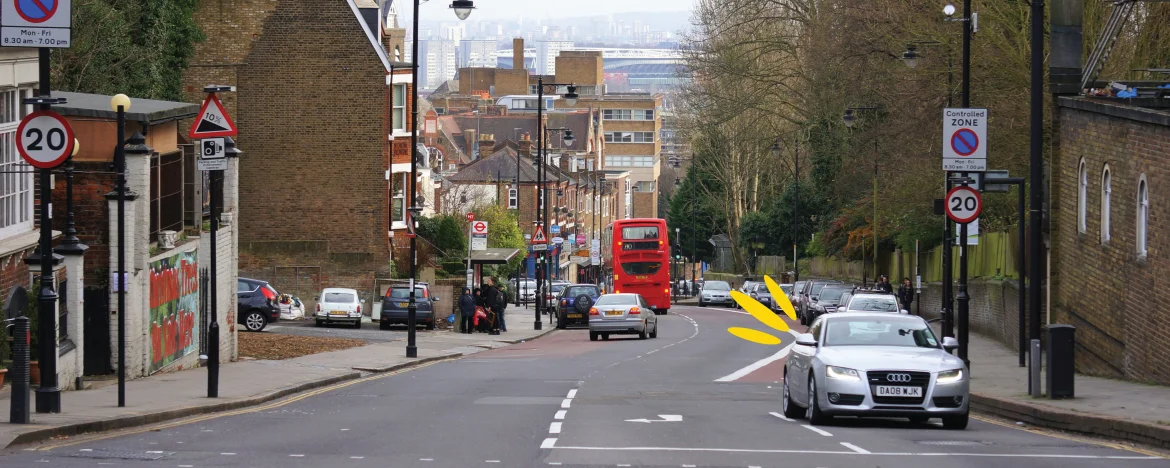
Street design is changing too. A new Manual for Streets is being published and embedded in planning policy. The key shift: pedestrians and cyclists come first in design (not as an afterthought), with low-speed principles as default in residential areas.
Local authorities will also get updated speed limit guidance, though they keep control over setting limits locally.
The data revolution: Prevention, not just reaction
This is where the Safe System approach shows its real potential. Instead of just counting casualties after collisions, the strategy uses data to prevent them.
Road Safety Investigation Branch (RSIB)
A new body that analyses patterns and trends across all collisions, not just investigating individual incidents.
It will identify high-risk locations and behaviours, then issue safety recommendations on road design, vehicle standards, and enforcement priorities using data from police, DVSA, healthcare, and vehicles.
This new system will be focused on learning and preventing, not blame.
Linked health data
For the first time ever, police collision data will be linked with NHS hospital and healthcare records.
Why this matters: Current collision statistics may undercount serious injuries because:
- Some people don't go to hospital immediately
- Long-term injury impacts aren't captured
- Patterns in specific demographics might be missed
Linked data will reveal the true injury severity, long-term health outcomes, and which types of collisions cost the NHS most.
The pilot results are expected in 2028, using anonymised data with privacy protections.
Connected vehicle data
The government is exploring joining "Data for Road Safety" – a European initiative where vehicle manufacturers share safety data with road operators.
This means collecting near-miss data from vehicles (hard braking, swerves, close calls) to identify dangerous locations before someone gets seriously hurt.
Your car's data could help prevent the next collision.
This is the Safe System in action: Multiple data sources working together to identify problems, target resources where needed, and intervene proactively – not just count casualties after the fact.