The ban on new petrol and diesel vehicles could make owning a classic car more challenging

We know we’re all about the shiny, new and exciting here at Carparison.

But as a company of car lovers, we can safely say the appeal of the classic car is not to be underestimated. Sure, we love our XPENGs and our BYDs and our Polestars – but there’s a big old soft spot in our hearts for the superstars from bygone eras.

The cars and the carmakers.

Yes, we mean the Austins and the Triumphs and the Minis of old. And we’re not alone; there’s a big market for classic cars all across the globe.

Who wouldn’t want to look totally chic driving down the boulevard at sunset in a vintage coupe sports car?

It’s literally the stuff lottery daydreams are made of.

But with the 2030 ban on the sale of new petrol and diesel cars fast approaching, we’re left with big questions about the future classic cars in the UK.

Because they’re not just works of beauty. 

They also represent the best of petrol and diesel manufacturing. And what place does the classic combustion engine have in this new electric world?

We’re diving into exactly why classic cars have endured, and whether the 2030 ban will stomp all over its kerb appeal.
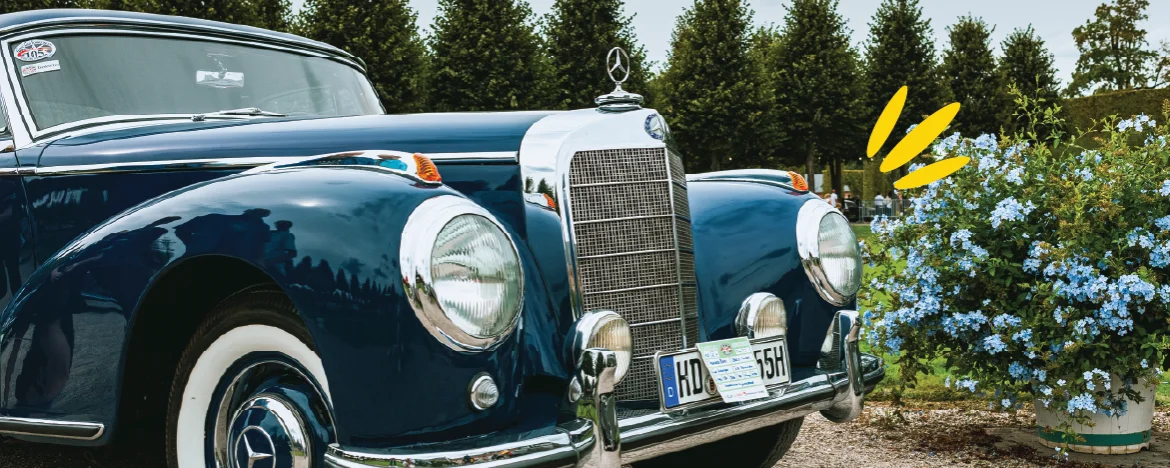
 

Classic car parked on driveway

There's still a big appetite for classic cars

What makes a car ‘classic’?

HMRC have their own official criteria, but classic status is about more than revenue and tax brackets.

A true classic car is kind of like a cocktail – it doesn’t exist until you’ve shaken together a few key ingredients and come away with something magical.

There’s no one-size-fits-all recipe here, though. What elevates a car to classic status can be pretty subjective.

Age, of course, is your first clue. The car won’t be hot off the factory floor; as a general rule, it’ll be somewhere between 20-40 years old and deeply embedded in the public consciousness.

But not just any ancient car qualifies as a classic (sorry, your ‘90s reg Toyota Corolla probably doesn’t count).

There are other factors involved too: 

  • Rarity: Limited production runs can make older cars even more appealing
  • Design and innovation: Landmark styling goes down in automotive history
  • Historical significance: Capturing a snapshot of a particular era or moment
  • Emotional connection: Nostalgia plays a big role in making a car feel truly special
  • Market value: When owners consider the car to be worth more than its actual list price (and pay accordingly)

You don’t need to hit all the ingredients on the list to have a classic on your hands, but two or more definitely helps.

Take the Mini Cooper – it’s not rare, but it wins points for landmark styling, historical significance, and emotional connection. Even with the new MINI around, the original Mini Cooper can still reach prices of up to £60,000 where the condition is pristine and the mileage is low.

Triumph models, on the other hand, are considered something of a rarity these days. With the British carmaker going defunct back in 1984, there’s limited surviving stock on the market.

It also means the design and styling is frozen in a bygone time: the era of the ‘70s sports coupe. They literally don’t make cars like the Triumph Spitfire anymore.

And to car enthusiasts, that’s exactly what makes a classic car so appealing. It’s why people spend hundreds and thousands of pounds restoring cars that would otherwise end up on the scrapheap of history.

Why people choose classic cars

Forget that old cliché about men and mid-life crises; people of all ages and genders choose classic cars for a multitude of reasons.

But the big one? It’s got to be a big healthy helping of sentimentality. Classic cars are literal representations of another time, and they can evoke powerful memories of youth and family.

There’s nothing quite like getting behind the wheel of the beloved car you remember from your childhood.

And even if it’s not an emotionally motivated choice, there’s plenty of other reasons to get behind the wheel. Older cars are often seen as hallmarks of timeless style and high-quality craftsmanship, which is a boon over the mass-produced modern car.

The lack of digital driving aids is also an appeal to some; it means a more organic and engaging driving experience. There’s no lane assist with a GT6, so your focus has to be that much sharper.

The simplicity and ease of maintenance is another big draw. 

No digital instrument clusters, no electronic sensors: just simple mechanical components.

They also make for a really good investment – which isn’t something you can usually say about a car. New cars depreciate in value really quickly, but classic cars can skyrocket in value even decades after they left production.

Meanwhile, from a less fiscal perspective, there’s an argument to be made that maintaining an older car is a different route to sustainability. 

The classic car might be powered by petrol, but it has a significantly longer lifetime than the average car.

It’s like having that staple vintage leather jacket in your wardrobe; it’s well made and will last forever if you look after it properly. And as long as you have it in your repertoire, you won’t be buying a new one every few years.

One old car for decades as opposed to a new one every ten years? That’s a win for sustainability.

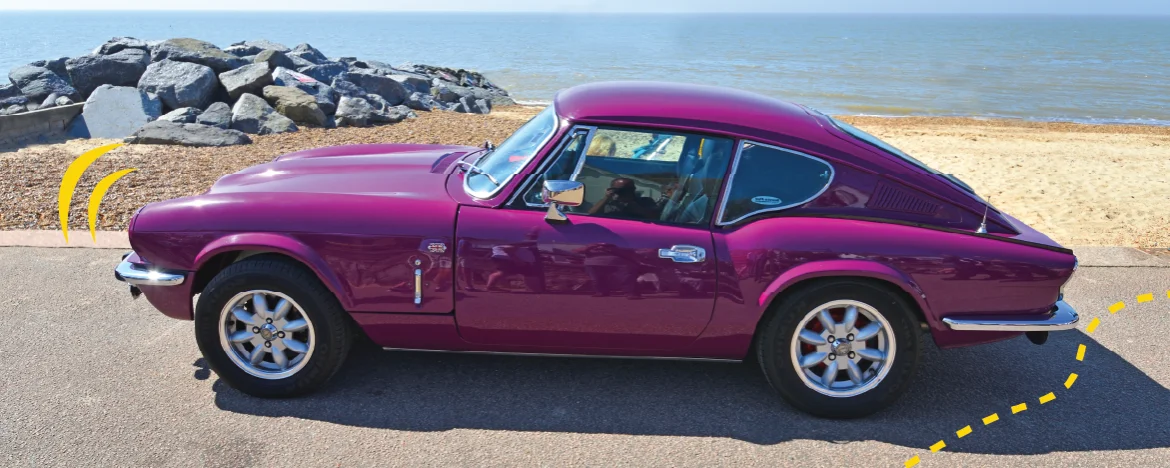
Triumph GT6 Mark III

Absolutely iconic: the Triumph GT6 Mark III in magenta paint

The 2030 ban: What it means

The Government has flip-flopped on this one more than an overdone pancake, but for the moment, petrol and diesel are still on the way out – at least, in the UK.

The 2030 ban on the sale of new petrol and diesel (ICE) vehicles is part of a big push to reach Net Zero on the UK’s carbon emissions.

And it means from 2030 onwards, car manufacturers won’t be able to make (or sell) brand-new ICE vehicles in the UK. Hybrid cars have a bit more time though; they’ll be banned here from 2035 onwards. 

For now. 

That basically leaves us with electric cars as the only viable way forward right now. So, out with the old and in the with the new. Seems simple enough on the surface, doesn’t it?

If only.

If the automotive industry is a big lake with a deceptively still surface, then the 2030 ban is the great rock someone has lobbed in to disturb all the hidden currents moving underneath.

It’s a big splash with an even bigger impact. 

And we’re already seeing the ripple effect playing out in real time: 

  • Fan-favourite ICE models being pulled from existing lineups
  • Changes to Vehicle Excise Duty, now including EVs as of April 2025
  • The return of 'retired' models as brand-new EVs to encourage widespread EV adoption
  • Influx of new 'electric-first' brands like Geely, XPENG and BYD, who build EVs from the ground up

With so many popular ICE models already disappearing from factories, we foresee a new generation of classic cars hitting the market in coming years. They’ll be younger, less rare, and probably not boasting any design landmarks.

But – and this is key – the emotional connection (or nostalgia, let’s be honest) will be strong enough to trump the other barriers to classic status.

Need an example?

We reckon it’s only a matter of time until the much-missed Ford Focus starts topping modern classic lists, but it won’t be the only one.

How will classic cars be affected by the 2030 ban? 

On the surface, not at all: the ban is only targeting the sale of new petrol and diesel vehicles, not pre-existing ones.

So, if you’re not ready to hop on the EV train, the used car market is your new best friend.

But if you’re a classic car owner, you can look forward to some interesting new challenges to navigate.

On one hand, market demand is expected to stay strong – and the legality of owning and driving a classic petrol or diesel car won’t change.

Even ULEZ could prove easier to navigate than expected; many classic models (typically over 40 years of age) qualify for historical status and are exempt.

On the other hand, the growing electric market means EV charging stations may overtake traditional refuelling pumps. Petrol is expected to remain available, but access to refuelling could be more difficult (and more expensive) as we get deeper in the EV revolution.

Which is a shame. A classic car like the E-Type Jaguar should be driven, not cooped up in a stale garage for the rest of time.

Classic car insurance post-2030

Let’s talk about the elephant in the room: classic car insurance.

Because you can keep driving your classic petrol car after the ban – but insuring it could end up more expensive if repairs and regularly maintenance become harder to achieve.

Some are worried about future parts scarcity for petrol models. But you could argue that most classic cars are already difficult to source replacement parts for. 

You’re not likely to find a replacement clutch for your Rover 2000 at your local garage.

The 2030 ban won’t make brands like Austin, Morris or Triumph any less defunct than they are already; the cars and component parts aren’t likely to be made any scarcer.

And we’d expect specialist classic car insurers to already account for this existing scarcity anyway.

All-in-all, it’s too soon to say which way the wind will blow on classic car insurance.

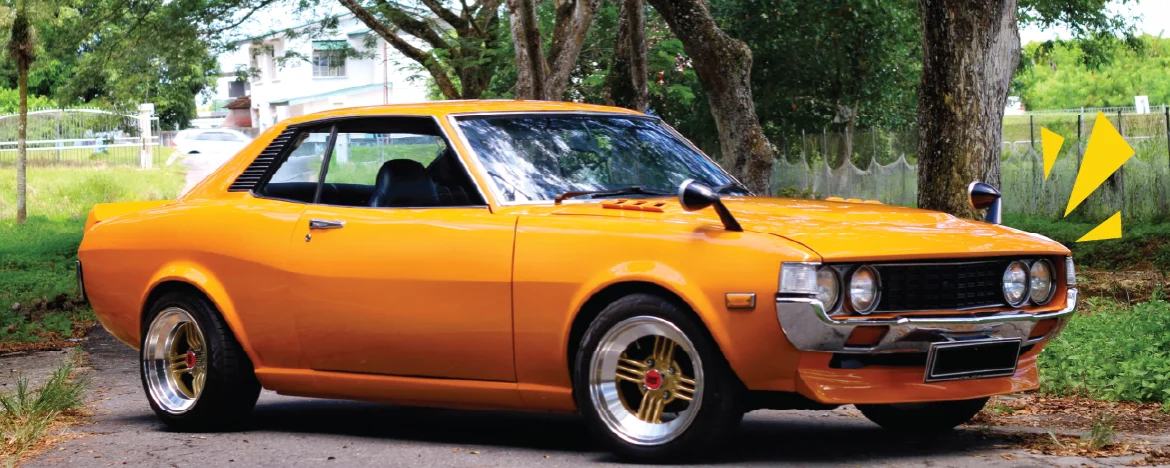
Historic Toyota model

This historic Toyota model is a classic

Future-proofing your classic car

The classic car community values tradition and preservation. But with the industry turning to electric power – and all the infrastructure that entails – restorations may start to look a little different.

Alongside restoration efforts, we could start seeing more classics being converted into EVs as drivers navigate the challenges posed by the 2030 ban.

Yes, it’s controversial, but there are benefits to this kind of modification:

  • Instant torque and acceleration: Electric power provides instant, smooth acceleration which may appeal when it comes to sportier models
  • Lower running costs: Petrol could be more expensive following 2030, as infrastructure changes
  • Reduced maintenance: Fewer moving parts could ease regular maintenance requirements, even for a historic model
  • Future-proofs against stricter regulations: Stays ahead of any tighter restrictions on ICE models and historic cars e.g. if ULEZ exemptions end
  • Upcycling: An electric battery could extend the longevity of the vehicle while preserving its classic design

It might not be traditional, but at its heart, it’s about bringing cars that could quickly become redundant into an electric future – and we’d argue that’s also an act of preservation. 

But there’s a flip side.

Electric conversions like this aren’t widely available. Estimates for this kind of work are far from cheap. And it requires extensive modification using a specialist skillset that’s hard to find. You won’t be able to rock up to your little local garage for this kind of work, that’s for sure.

And all that aside, we have to ask the obvious here. 

If the classic car embodies a bygone time through its design and engineering, does stripping out its engine and all the moving parts mean removing a big part of what made it a classic in the first place?

Time will tell.


Staying power

Despite the big shift to EVs, it’s clear carmakers understand the enduring appeal of a classic. Look no further than the new Ford Capri and Renault 5 – both brand-new EVs, but with historic names and design-cues taken from the iconic originals.

When even the newest, innovative models are looking back at the classics, it shows there’s still a strong appetite for historic models.

So, for now, all we can do is keep an eye on the horizon and wait to see how the ripple effect plays out. But despite the challenges the 2030 ban may bring, we reckon classic cars are here to stay – however that might look in the future.

Consider yourself a classic car fan?

Chloe Allen

Chloe Allen

Our Digital Marketing Executive Chloe is in charge of our e-newsletter. There's no one better placed to inform and delight you every month, so keep your eyes peeled for her newsletter hitting an email inbox near you soon.