Let’s bust twelve of the most common EV myths

Electric cars are nothing new, having quietly roamed our streets since as early as 1837.

But while the history of electric cars is a long and innovative one, it’s only in more recent years that popularity has truly rocketed.

Whether this is down to increased model choice, better battery technology, financial incentivisations, a growing charging infrastructure or the impending ban on new combustion cars in 2030, the fact remains that EVs are here to stay. 

In fact, according to Zapmap, a massive 37.6% of all new cars sold in October 2025 were either fully electric or plug-in hybrid (PHEV). That's over 54,000 registered in a single month.

Despite more of us choosing an electric car lease, many myths about EVs still fill our news and social media feeds. And while they won't suit everyone, it's important our buying decisions are based on facts rather than false news.

Enter our glorious leader, Matt Woodward, who is here to dispel the 12 most common EV myths in this short video. Backed by over 20 years of industry experience (we know, he doesn't look a day over 18) and thousands of EV sales under his belt – he's got the credentials to set the record straight.

Want the full breakdown? Keep reading as we dive into each myth with supporting data from industry partners and research sources.
EV myth number one

Fire risk?

“Electric cars are at more risk of catching fire”

In fact, it's quite the opposite. Electric fires are just more complicated to put out, so they take longer to deal with.

But let's dive into the data.

The headline is that, while still extremely rare, internal combustion engine (ICE) cars – those that use petrol and diesel to you and me – are significantly more likely to catch fire than an EV.

According to research compiled by the Energy Saving Trust, there's only a 0.0012% chance of an EV catching fire, compared to a 0.1% chance for a petrol or diesel vehicle. That means ICE vehicles are over 80 times more likely to catch fire than their electric counterparts.

To put this in perspective, between 2010 and 2024, there were just 511 fires involving high voltage batteries worldwide – a remarkably low figure considering the millions of EVs now on our roads.

However, it's important to note that when EV fires do involve the high voltage battery, they present different challenges for fire and rescue services.

These fires can be more difficult to extinguish, typically requiring between 4,000 and 10,000 litres of water to suppress. The lowest risk approach is often to allow the battery to burn itself out in a controlled manner where possible.

But if your car spontaneously catching fire is a concern, the data is crystal clear: choosing an EV is statistically far safer than opting for a petrol or diesel vehicle.

EV myth number two

Range anxiety?

“You’re more likely to run out of charge”

This is one EV charging myth we can happily debunk. EVs are not more likely to run of charge than an ICE is to run out of fuel.

It’s less about the car and more about the driver: we all know a risk-taker who loves running their fuel gauge on red, or nervous nellie who gets jittery with anything less than half a tank.

So as much as our driving style, our choice of car colour and perhaps our choice of car brand can say a lot about us, our tendency to roll the dice on topping up on fuel or charge does too.

Research by Tusker confirms that becoming stranded due to a lack of charge is no more likely than running out of fuel in a petrol or diesel car.

The AA even back up these findings, it just takes longer to get going again in an EV. But there’s new tech being developed to make charging as quick as filling up with fuel.

Their callout figures until April 2024 confirm that just over 2% of EV breakdowns were due to depleted charge. They predict that this will drop to only 1% to be exactly on par with ICE counterparts.

In case you were interested, the top two reasons ICE cars breakdown are the same as EVs breakdowns: tyres and battery.

EV myth number three

Are there enough chargers?

“There aren’t enough public charging points”

Popular charging app Zapmap says differently.

At the end of October 2025, there were 86,798 electric vehicle charging points across 44,142 charging locations in the UK.

The truth is, that’s already far more than the 8353 petrol stations out there. 

If we look back at how quickly it has grown:

  • End of 2021: 28,460
  • End of 2023: 53,865
  • End of 2024: 73,000

Since October 2024, there has been a 22% increase overall in EV charging points.

Naturally, EV charging has a slower turnaround. It’s estimated each session takes three times as long as traditional refuelling, depending on the conditions.

And you have to trust, like a campsite washing machine, that someone comes back to collect theirs on time and doesn’t keep you waiting. 

So a big increase in the number of charging stations is absolutely necessary.

But investment and commitment to improving the charging infrastructure remains high from both Government and the private sector.

Still have range anxiety? Here are our top picks for long range EVs.

EV myth number four

EVs are more expensive

“EVs are more expensive”

List price is a fair concern, with EVs tending to cost more upfront than petrol or diesel equivalents.

The average price of an EV in the UK currently sits between £48,000 and £50,873.

However, when comparing the cost of the best electric car lease deals at Carparison, many of them undercut ICE alternatives by some margin.

And here's why: when you lease, you're not forking out £48,000+ for the retail cost. You're only paying the predicted depreciation over your contract term, which makes going electric far more affordable from day one.

And when considering lifetime costs, EVs come up top trumps. Yes, they're more expensive to buy outright, but you'll spend significantly less on them through the lifetime of the car.

The reality is once you’ve driven away in your shiny new EV, you can be content knowing that running costs are significantly reduced. 

Servicing schedules are longer, due to electric cars having less moving parts, and the cost of filling up is less than at the fuel pumps, especially for those who charge at home.

All that is before even considering the tax savings currently available via business contract hire and the massive savings available through salary sacrifice.

More and more companies are now producing more affordable EVs too – just look at the Leapmotor T03.

EV myth number eleven

EVs are expensive...

“EVs are expensive to run”

Yes, EVs are likely to cost more upfront and can be pricier to insure.

However, choosing the right electric car lease can prove more cost-effective than opting for a petrol or diesel one. Plus, ongoing costs including servicing and charging are reduced. Just compare the 20 moving parts in an EV to the 200+ in an ICE car.

Data from Lex Autolease suggests that EVs are between 27% and 37% cheaper to maintain than combustion engine equivalents.

Tusker estimates that maintaining their EV fleet costs 30% less than petrol, and a whopping 60% less than diesel. 

In February 2023, BookMyGarage.com evidenced that maintenance bills for EVs were 43% less for EVs.

Although there are many mitigating factors including your tariff, where you charge and the current cost of fuel, EVs are considered significantly cheaper to charge than ICE cars.

EV myth number five

Are EVs enjoyable?

“EV drivers don’t enjoy it and return to ICE”

Contrary to what some tabloids might say, driving an EV is pretty popular. Just look at the data.

Research by the Electric Vehicle Association (EVA) revealed that 91% of EV drivers are satisfied with their car and wouldn’t return to ICE.

The survey of 1,600 UK drivers concludes that the experiences of EV owners, including public charging, are extremely positive.

Supporting the figures above, 86% found their EV cheaper to run and 92% would recommend an EV to loved ones.

Consumer insights provider GWI’s 2023 research also confirmed that 90% of UK electric or plug in hybrid owners are satisfied or very satisfied with their car charging experience.         

EV myth number six

What if I can't charge at home?

“Home charging isn’t possible for everyone”

Now we aren’t claiming to debunk this myth, as it’s actually true: current charging infrastructure can’t support home chargers in all locations. It’s also known as the Pavement Tax.

This could be down to safety concerns around having wires trailing across public walkways, the distance from available power sources, or practical challenges in older properties and shared housing developments.

In many cases it can be a fight to get a dedicated parking spot at a property at all.

But not having access to a home charger shouldn't put you off going electric altogether.

In fact, things are improving.

All new build homes with private parking are now required to offer facilities for EV charging as standard. And if you're renting, you have the legal right to request that your landlord installs an EV charger (though they can refuse for valid reasons like listed building status or leasehold restrictions).

There are also government grants available – up to £350 for tenants through the Electric Vehicle Chargepoint Grant, and larger infrastructure grants for landlords looking to add charging facilities across multiple properties.

What do you do if you aren't one of the two thirds of the UK population with a driveway, or you're in an older property without built-in charging?

You'll be dependent on the fast-growing public charging network.

Alternatively, you can recharge at some car parks, or make use of 'destination charging' when you head out for the day. It may also be possible to use charging facilities at your workplace.

Enter Carparison’s ultimate guide to EV charging, which we hope has some really useful guidance if this is applicable to you.

EV myth number seven

So many EVs to choose from now!

“There’s not a lot of choice”

As of the end of 2023, you have 197 different EV models to choose from across 39 manufacturers.

There are 135+ EV models to choose from in the UK, this is almost a third (29.3%) of models on the new car market, according to the Society of Motor Manufacturers and Traders (SMMT).

And there’s no business claiming these models are all the same, with the electric car range in the UK catering for varied budgets, electric ranges, sizes and styles.

All you have to do is look at a GWM ORA 03, compared to a Tesla Model Y, compared to a Nissan Leaf or a Genesis GV70

Spoilt for choice? We’d say so.

We’ve also seen an influx of East Asian brands launching in the UK, driving price and technological competition even further, including:

EV myth number eight

Will I be able to insure my EV?

“Insurers are reluctant to insure EVs”

This couldn’t be further from the truth.

We wouldn't have been able to lease thousands of EVs to very happy customers if insurers were genuinely reluctant to cover them. The reality is that EV insurance is simply adjusting to a rapidly maturing market.

But it won't have escaped your notice that car insurance premiums are one of the things driving up car running costs of late.

In July 2024, Confused.com claimed that premiums were up by 58% across all cars in the previous 12 months, whilst The Guardian (based on figures between 2022 and 2023), reported that premiums were up by a third, but that this was beginning to ease.

So it isn't welcome news that you're likely to pay more to insure an EV than you are an ICE car, with premiums for electric vehicles reportedly between 10-30% higher according to industry sources.

This is largely due to factors like higher repair costs, specialised parts, longer repair times and the complexity of battery technology.

However, the belief that insurers are reluctant to insure EVs is in fact a myth.

According to Zapmap, there are now over 1.7 million fully electric cars on UK roads.

As EVs become increasingly mainstream, more mechanics are being trained to work on them, parts are becoming more readily available, and insurance costs are gradually coming down as insurers gain more historical data on EV performance and risk.

EV myth number nine

Can I do long journeys?

“EVs aren’t suited to long journeys”

The average range of available EVs has increased dramatically in recent years.

In 2024, the average range of an electric car was 283 miles (WLTP Comb) compared to just 84 miles in 2014 – that's over a 140% increase in the past decade.

Many 2025 models now easily exceed 300 miles on a single charge, with premium options approaching the 500-mile mark.

For example:

  • Polestar 4 – 385 miles (WLTP Comb), with an OTR of £60,000
  • Leapmotor T03 – 165 miles (WLTP Comb), with an OTR of £15,995

It's important to note the WLTP range figures will vary in the real-world, and ultimately depend on driving style and conditions, but this is no different to ICE cars.

While many things affect our driving needs, and long journeys are likely to feature at least somewhere for most of us, most journeys are likely to be a doddle in an EV.

With the Department for Transport suggesting that 72% of journeys made are under five miles, you'll have no issues nipping into town and back, or suffering the commute to work.

What's more, the UK's charging infrastructure has evolved dramatically. As of January 2025, there were 14,711 rapid and ultra-rapid chargers across the UK – a 35% increase since January 2024.

This means drivers are never more than 25 miles from a rapid charger on UK motorways and A-roads. Modern EVs with 800-volt architecture can add 180-200 miles of range in just 18 minutes, making charging stops barely longer than a coffee break.

Impressively, the RAC Foundation found that new UK EVs travel an average of 9,435 miles per year in their first three years of ownership, which is 26% further than a petrol car.

EV myth number ten

Can the grid cope?

“The grid can’t cope”

National Grid EV myths deserve an article all to themselves.

But here goes.

The National Grid estimates that demand would only increase by around 10% even if the UK fully switched to EVs overnight.

To put this in perspective, the highest peak electricity demand in the UK in recent years was 62GW in 2002.

Since then, the nation's peak demand has fallen by roughly 16% due to improvements in energy efficiency – so we'd still be using less power as a nation than we did in 2002, even with universal EV adoption.

The transition to EVs will also help the grid balance supply and demand. Renewable sources create excess power which is stored for periods of high demand.

Plus, with the growth in offshore wind farms targeting 50 gigawatts by 2030, combined with other renewables, plus new nuclear and interconnection with other countries, the UK is well-prepared to meet the expected extra 120 terawatt hours needed for electrifying transport.

This is further supported by smart charging, a feature of many EVs, that allows your car to be charged overnight during off-peak periods when renewable energy is most plentiful, rewarding you with lower tariffs accordingly.

The UK Government has even introduced Electric Vehicle Smart Charge Points Regulations to ensure all new charge points have this smart functionality built in.

There you have it. Straight from the horse's mouth.

[Insert pun about horsepower]

EV myth number twelve

Batteries degrade quickly

“EV batteries degrade quickly”

The fact that most manufacturers are offering 10-year or 100,000-mile warranties on their batteries instantly buries this myth into the dust. 

It’s a statement of confidence from these manufacturers who simply couldn’t do so if their product quality wasn’t up to scratch.

Tesla put their cars to the test as far back as 2022 and the average battery depreciation at 200,000 miles was only 12%. 

Show us an ICE car that makes it to 200,000 miles with its engine in such good nick, and we’ll eat our proverbial hats.

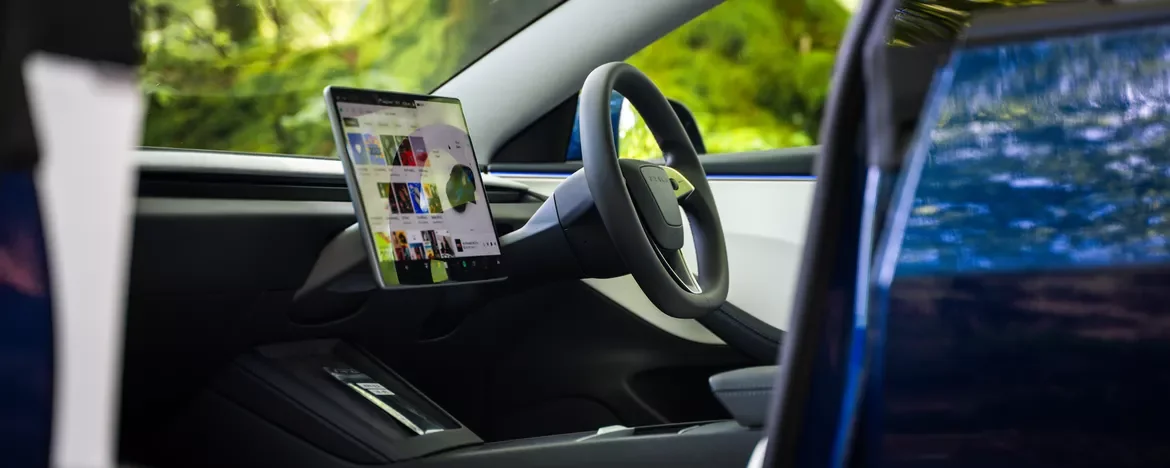
Tesla Model 3

Why lease your EV?

So, you’ve got your heart set on an EV as your next car, but why is leasing the best way to fund it?

While there are a whole host of extra benefits of EV leasing for businesses, there are many reasons why people like you are choosing to lease their first or next electric cartoo.

Compared to buying an EV, leasing allows you to seamlessly change your car every few years.

Like other financing methods, you will be subject to a mileage limit and a fair wear and tear commitment. But otherwise, you’re paying a fixed price that’s protected from unpredictable depreciation, fast-developing technology and any resale hassle.

If you’re new to the world of EV, it also lets you test it out without any long-term commitment.

Unlike many other financing methods including PCP, you’re not financing the full value of the car and therefore aren’t footing a high interest bill as a result. With leasing, you only finance the agreed depreciation of the car.

And this is why you’ll generally see much smaller monthly payments.

With Carparison, you’re getting all the benefits of using a leasing broker. But you can trust you’ll be looked after based on 1000s of verified customer reviews, and you’re dealing with a company that cares about more than just its bottom line.

And we’re EV specialists, having leased thousands of them now.

Not limited by distance, you can peruse every make and model from the comfort of your sofa, and your new EV will be delivered straight to your door.

It’s our mission to put the ease in your next car lease.

And we’re ready to get going – are you?

Want the full guide to EV leasing?

Sarah Hunt

Sarah Hunt

Sarah is the Head of Marketing and she's tasked with keeping the fantastic marketing team in line. She's probably the reason you've heard of us, and her wealth of marketing experience means that no challenge is too big.